

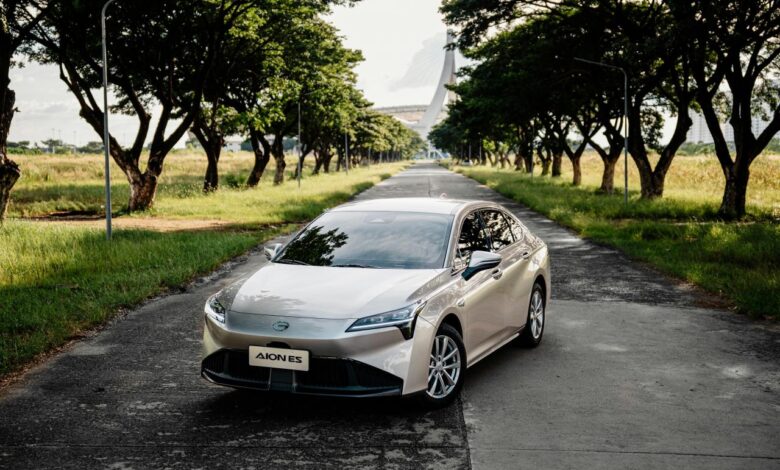
The landscape of global mobility is undergoing a radical transformation that promises to redefine how we perceive distance, time, and environmental responsibility. Revolutionizing transportation through future vehicle technology is no longer a distant dream confined to science fiction novels, but a tangible reality manifesting in our streets today.
From the surge of high-efficiency electric powertrains to the sophisticated neural networks governing autonomous flight, the automotive industry is at a critical inflection point. This evolution is driven by a convergence of artificial intelligence, advanced material science, and a global mandate for sustainable development.
As urban populations swell, the traditional models of car ownership and combustion-based transit are being replaced by “Smart Devices on Wheels” that communicate with their surroundings in real-time. This shift represents more than just a change in fuel source; it is a total reimagining of the human-machine interface and the infrastructure that supports it.
Understanding these innovations is essential for anyone looking to navigate the future of commerce, travel, and urban living. We are witnessing the birth of a new era where vehicles are not just tools for movement, but integrated hubs of data and energy that contribute to a cleaner, safer, and more efficient world. This article explores the core technologies and strategic shifts that are currently dismantling the old automotive hierarchy to build something far more resilient.
The Power Shift: Beyond Traditional Lithium-Ion
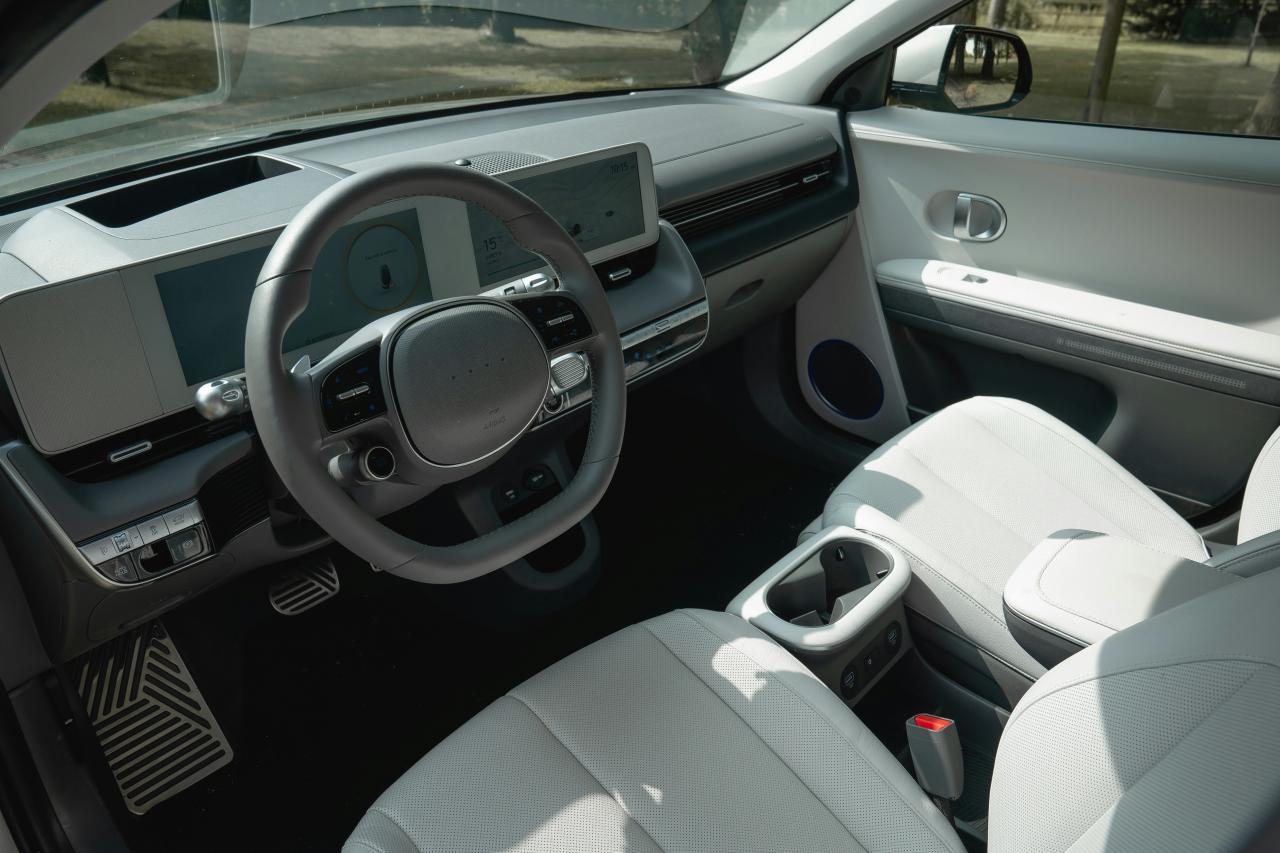
The heart of the automotive revolution lies in the energy that powers it, moving away from volatile fossil fuels toward stable, high-density storage solutions.
While lithium-ion has been the pioneer, new chemistries are emerging to solve the long-standing issues of range anxiety and charging times.

A. Solid-State Battery Breakthroughs
Solid-state batteries replace the liquid electrolyte of traditional cells with a solid ceramic or polymer material.
This innovation significantly reduces the risk of thermal runaway, making vehicles much safer while nearly doubling their energy density.
Manufacturers are now racing to scale this technology to provide EVs with over 600 miles of range on a single ten-minute charge.
B. The Rise of Sodium-Ion Alternatives
Sodium is abundant and inexpensive compared to lithium, making it the perfect candidate for budget-friendly electric vehicles.
While currently offering lower density, sodium-ion cells perform exceptionally well in cold climates where traditional batteries often struggle.
This technology is key to democratizing electric mobility in developing nations and for short-range urban transit systems.
C. Hydrogen Fuel Cell Integration for Heavy Logistics
For long-haul trucking and maritime shipping, batteries often prove too heavy and slow to recharge.
Hydrogen fuel cells offer a zero-emission solution that mimics the rapid refueling experience of diesel engines.
As green hydrogen production becomes more cost-effective, we will see a dual-track future where batteries power cars and hydrogen powers the heavy-duty fleet.
The Sentient Vehicle: AI and Autonomy
Artificial intelligence has graduated from simple driver-assist features to becoming a predictive co-pilot that can navigate complex urban chaos.
Autonomous vehicles (AVs) are shifting the focus from the thrill of driving to the productivity and safety of the journey.
A. Level 4 and Level 5 Autonomous Systems
True autonomy requires a vehicle to handle all driving tasks without human intervention under specific or all conditions.
Using a combination of LiDAR, high-resolution cameras, and ultrasonic sensors, these cars build a 3D map of their environment in milliseconds.
The elimination of human error, which accounts for over 90% of road accidents, is the primary goal of this technological push.
B. Vehicle-to-Everything (V2X) Communication
A smart car is only as effective as the infrastructure it talks to, including traffic lights, other cars, and even pedestrians’ smartphones.
V2X allows a vehicle to “see” around corners by receiving data from a car two blocks ahead that has just hit its brakes.
This interconnected mesh network optimizes traffic flow, reduces idling time, and drastically cuts down on urban carbon emissions.
C. In-Cabin Intelligence and Predictive Comfort
The interior of the future vehicle is evolving into a mobile living room equipped with Large Language Models (LLMs) and biometric sensors.
AI assistants can now monitor a driver’s heart rate or fatigue levels, automatically adjusting the climate control or suggesting a rest stop.
This level of personalization turns the vehicle into a proactive health and productivity partner rather than a passive metal box.
Manufacturing 4.0: Building the Future
How we build cars is changing just as fast as what we put inside them, with new techniques drastically lowering costs and waste.
Sustainable manufacturing is the “silent partner” in the automotive revolution, ensuring that the production of green cars is itself environmentally friendly.
A. Gigacasting and Structural Battery Packs
Traditional car bodies are made of hundreds of stamped metal parts, but gigacasting uses massive machines to create entire sections in a single pour.
This reduces weight, increases structural rigidity, and eliminates thousands of robotic welds from the assembly line.
Similarly, structural batteries turn the battery pack into a load-bearing part of the chassis, saving even more weight and space.
B. Digital Twins and Rapid Prototyping
Before a single piece of metal is cut, future vehicles are designed and crash-tested thousands of times in a virtual environment.
Digital twin technology allows engineers to simulate years of wear and tear in a matter of hours, accelerating the development cycle significantly.
This “China Speed” approach has cut the time to market for new models from five years down to less than eighteen months.
C. Circular Economy and Battery Recycling
The end-of-life for a vehicle is now being planned at the moment of its conception through “Closed-Loop” recycling systems.
Advanced hydrometallurgical processes can now recover over 95% of the cobalt, nickel, and lithium from old batteries to make new ones.
This reduces the reliance on environmentally damaging mining operations and stabilizes the supply chain for critical raw materials.
Urban Air Mobility: Taking to the Skies
The final frontier of revolutionizing transportation is moving from 2D roads to 3D aerial corridors through Electric Vertical Take-off and Landing (eVTOL) aircraft.
Urban Air Mobility (UAM) aims to bypass ground-level congestion entirely for short-distance passenger and cargo hops.
A. The Emergence of the “Flying Taxi”
eVTOLs use multiple electric rotors to lift off like a helicopter but fly forward with the efficiency of a fixed-wing airplane.
These vehicles are designed to be much quieter than helicopters, allowing them to operate within residential city centers without causing noise pollution.
Initial commercial routes are already being mapped out in major hubs like Dubai, Seoul, and Los Angeles.
B. Vertiport Infrastructure and Air Traffic Management
Taking flight requires a new type of “airport” called a vertiport, located on top of existing parking garages or transit hubs.
Managing thousands of small aircraft in a city’s airspace requires a fully automated, AI-driven air traffic control system.
This digital skyway ensures that flight paths are optimized for safety and energy efficiency without human controllers becoming overwhelmed.
C. Last-Mile Delivery Drones and Logistics
Beyond carrying people, autonomous drones are set to revolutionize the “last mile” of e-commerce delivery.
By removing delivery vans from the streets, drones can reduce neighborhood congestion and provide nearly instant delivery for medical supplies and food.
The integration of drone docks into apartment buildings will soon make aerial delivery as common as checking your mailbox.
Conclusion

Revolutionizing transportation through future vehicle technology is a journey toward a more connected and sustainable world. Success in this new era depends on our ability to integrate artificial intelligence into every aspect of the mobility ecosystem.
The transition from liquid fuels to solid-state electricity is the most significant energy shift in over a century of automotive history. Autonomous systems are not just about convenience; they are a moral imperative to eliminate the tragedy of road fatalities.
Our cities will soon breathe easier as smart traffic management systems reduce the need for idling and wasteful congestion. Manufacturing innovations like gigacasting are making high-tech vehicles affordable for the average consumer for the first time.
The circular economy ensures that the green revolution does not come at the cost of devastating the natural world through mining. Urban air mobility will redefine our geographic boundaries, making a fifty-mile commute a matter of mere minutes.
Privacy and cybersecurity must be the twin pillars upon which we build our trust in these sentient digital companions. The vehicle of the future is an extension of our digital identities, seamlessly syncing with our homes, work, and health.
Governments and private enterprises must work in lockstep to build the charging and communication infrastructure required for this leap. Every innovation we see today is a stepping stone toward a future where mobility is a clean, silent, and effortless utility. The roar of the engine is being replaced by the silent hum of progress and the invisible pulse of data.
We are no longer just passengers in a machine; we are participants in a global network of intelligent movement. The road ahead is unwritten, but the technology to navigate it is already within our grasp. Embrace the change today, for the way we move tomorrow will forever alter the course of human civilization.